
10 Questions to Ask Your Physical Therapist on Your First Call

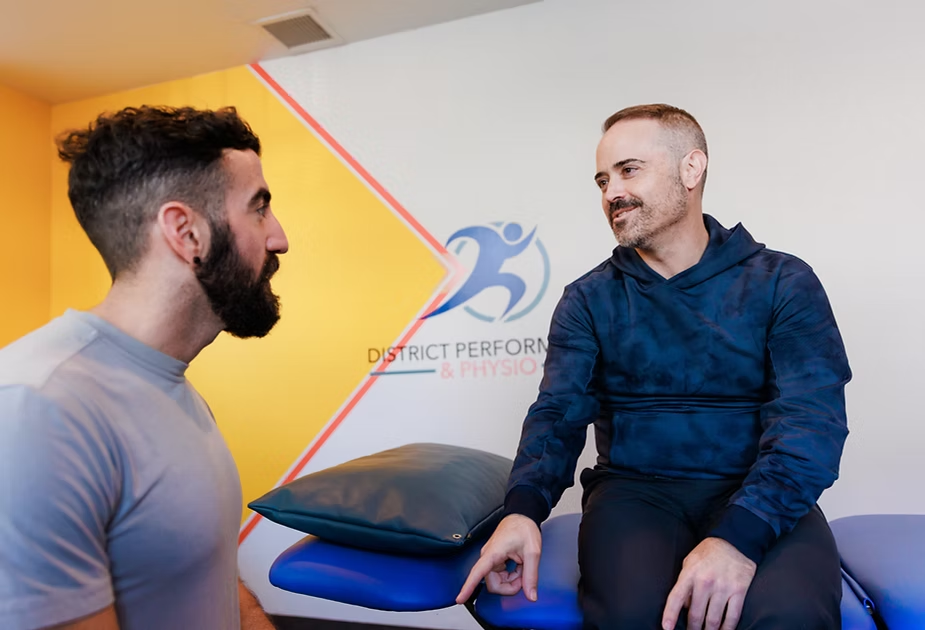
You have been trying to manage the pain on your own for a while now. You have rested, followed advice from a few videos, and perhaps asked your trainer about it between sets. Still, the pain returns whenever you run, lift, or reach the end of a long day.
So you are finally looking into physical therapy. And if you are going to put time and money into this, you want the right practice on the first try.
Knowing the right questions to ask your physical therapist is what makes that first call worth making. Ten minutes on the phone can tell you how a practice actually works, what your care will look like week to week, and whether it fits the life you are trying to get back to.
Your First Call Is an Evaluation, and You Are the One Running It
Most people use that first phone call to ask two basic questions: “Do you take my insurance?” and “When can I come in?” They book an available appointment, then wait until they are in the room to learn how the practice actually works.
Flip that approach. This is your chance to evaluate the practice before committing several weeks of your time and recovery to it. A few thoughtful questions can help you decide whether the care, cost, and overall experience fit what you need.
A practice that takes pride in its work will expect those questions. Its team should be able to explain its approach clearly and give you direct answers about what you can expect.
Why These Particular Questions Matter
What you ask shapes what you get. Most people have never seen high-quality physical therapy from the inside, so they have nothing to compare against and no way to tell a strong answer from a vague one. These ten questions give you that frame, and they work on any practice you call.
The 10 Questions to Ask Your Physical Therapist
Ask all ten if you have the time. Ask three if you do not. Either way, here is what each question is really getting at, and what a good answer sounds like when you hear one.
1. How much of each visit will I spend one-on-one with my physical therapist?
A 60-minute appointment does not always mean 60 minutes with your physical therapist. At some practices, the therapist stays with you throughout the visit. At others, they may divide their attention among several patients while an aide leads part of your session.
Ask how much time you will work directly with your therapist. More individual attention gives them time to track your progress, adjust your exercises, and address any concerns as they come up.
What a good answer sounds like: Listen for a clear number, not a vague promise that you will receive “plenty of attention.” A strong practice should tell you exactly how much of each visit belongs to you. At DPP, for instance, we make that answer simple: every patient works one-on-one with a physical therapist for the entire appointment, from start to finish.
2 and 3. What does the first session consist of, and what should I leave with?
These two overlap, so ask them together. The answer tells you whether the first visit focuses on hearing your story or on getting you processed and out the door.
Listening is the whole foundation. If you don't have enough time in that first visit to hear the full story, something important is already missing from the plan that follows.
What a good answer sounds like: Listening first, then assessment, then a plain explanation of what they found. And you should walk out of session one with three specific things: a clear understanding of what is going on, a plan built for your goal, and exercises you can start that same day.
4. Will you explain what is going on in a language I actually understand?
You might be tempted to ask what is driving your problem. A credible practice will not diagnose you over the phone, and a good one will say so plainly. The more useful question is how they communicate once you are in the room.
What a good answer sounds like: They tell you they cannot know until they watch you move, then describe how they will walk you through what they find. Plain language, not medical code. And not only on day one, but every time something changes.
5. If I want to keep running, lifting, or training while I recover, is that something you would work with me on?
This is the question most people want to ask but don't. For a lot of us, the run or the gym is not a hobby. It is the thing that holds the week together, and handing it over feels like a big ask.
What a good answer sounds like: Modify, not stop. The right practice keeps you doing the 90% of your routine that is working and adjusts the 10% that needs it for now. That approach is the whole idea behind our guide to staying active while you recover.
6. What happens if I've tried PT before?
If you have worked with another physical therapist before, that experience can be valuable information when building your next plan. A good practice should want to understand what you have already tried, what worked, what did not, and what you liked about your previous treatment.
What a good answer sounds like: Curiosity rather than starting from scratch. Your previous PT experience can help your therapist understand what works for you and what does not, so they can use that information to build a plan around your goals and needs.
7. How will I know the plan is actually working?
Progress rarely moves in a straight line. Without something to measure against, a flat week can feel wasted, and that is usually when people drift away from a plan that was working fine.
What a good answer sounds like: You should leave each visit knowing how you have progressed from your starting point and how close you are to your goal. That conversation should happen every session, not during a single check-in six weeks later. The therapist should explain your progress in clear, specific terms that you can easily understand and repeat.
8. How do your therapists decide when to progress or change the treatment plan?
A plan written in week one and followed to the letter through week eight is not really a plan. Listen for evidence that yours gets revisited as you change, because you will change quickly in the early weeks.
What a good answer sounds like: Constant reassessment. They should be able to describe what they watch for, how they know you are ready for more, and how fast they adjust when something is not responding the way they expected.
9. What happens if I am feeling better but not all the way back to the activity I care about?
This is the gap most people fall into. Feeling fine day to day and being ready for a Saturday long run, a heavy squat day, or a full weekend with your kids are two different things, and plenty of plans quietly end at the first one.
What a good answer sounds like: The activity is the finish line, not the absence of symptoms. Ask what the final phase looks like, and listen for a return-to-activity plan with real benchmarks tied to what you actually want back.
10. What is this realistically going to cost me, in money and in time?
Ask it straight out. Cost is a fair thing to weigh, and so is time, which almost nobody brings up on the phone. Visit frequency is where a plan either fits your week or quietly does not.
What a good answer sounds like: Numbers up front, before you have to push for them. What a visit costs, roughly how many you are looking at, and how often you will need to come in. Full transparency on both means no surprises later, and it lets you compare options on what your whole course of care looks like rather than a single appointment.
The 10 Questions at a Glance
Ask this | What it tells you |
How much of the visit is one-on-one? | How your time and money are actually spent |
What does the first session involve, and what do I leave with? | Whether the practice listens before it treats |
Will you explain things in plain language? | How well you will understand your own care |
Will you work with me on training while I recover? | Whether they modify or simply stop you |
What if PT did not work for me before? | Whether your history counts as information |
How will I know the plan is working? | How progress gets measured and shared |
How do you decide when to change the plan? | Whether the plan adapts to you |
What if I feel better but am not back to my activity? | Where they think the finish line is |
What will this cost in money and visit frequency? | How transparent they are before you commit |
You Do Not Need to Ask All Ten
Three or four will tell you plenty.
A practice that answers clearly on the phone tends to explain things clearly in the room. That is the real signal, and it's why this call is worth ten minutes of your time. One of our DPP patients shared what that clarity and one-on-one attention looked like once treatment began:
I have been seeing Nicki for the past two months and cannot say enough good things about her. I've been through multiple PT groups over the last two years for a proximal hamstring injury and a separate shoulder and arm problem, and still couldn't get back to the activities I cared about. I've seen results faster with Nicki than with anyone else I've worked with, and I now realize what excellent physical therapy actually looks like: one-on-one with her for the entire session, every session.
I'm running more now than I've been able to at any point since the hamstring injury, and I'm finally getting real pain relief in my shoulder.
My case is complicated. I showed up with dozens of doctor's reports, imaging results, and past PT regimens, and she went through all of it and asked plenty of questions. She also checks in regularly on what my other providers are doing so she can plan around it, which shows how holistically she approaches treatment.
Her dry needling has given me more relief than anything else I've tried, and she has an actual plan rather than a generic sheet of exercises. I ask a lot of questions and she has never made me feel like I was taking up her time, and when something isn't working she's quick to adjust. I truly appreciate how she explains what each exercise is actually doing and how the treatment works. It helped me understand what is wrong and gave me a real sense that we're moving in the right direction. She also has a genuine and warm personality, which does more than you'd think when someone is putting needles in you.
On the cost: I spent two years of covered visits at other clinics without getting to where I am now. Paying out of pocket to see Nicki has been worth every dollar.
For the first time in over two years, I'm confident I'm actually going to heal and get back to all the tennis, soccer, and running I love. If you've got something complicated that hasn't responded to standard treatment, she's the one you want.
— RJ Dill
Want to Hear How We Would Answer These? Start With a Discovery Call
A Discovery Call is exactly what it sounds like: one conversation. There is no plan to sign up for, and no commitment attached to it.
Bring the list. Ask all ten. You will hear how we handle one-on-one time, what your first session looks like, what happens if PT has let you down before, and what this costs in both money and visits, before you decide anything.
Schedule a Discovery Call and let's talk through what getting back to your training could look like.
FAQs
What questions should I ask a physical therapist before my first appointment?
Ask how much of each visit is one-on-one with your therapist, what the first session involves, what you will leave with, whether you can keep training while you recover, how progress gets measured, and what your care will cost in both money and visit frequency.
Can I keep working out while I am in physical therapy?
In most cases, yes. A good plan modifies your training rather than stopping it, adjusting load, range, tempo, or exercise choice while the rest of your routine carries on. Ask about this on the first call, because the answer shows you how a practice treats active people.
What should I leave my first physical therapy session with?
Three things: a clear understanding of what is going on, a specific plan for what comes next, and exercises you can start that same day. If you leave with only a label for your condition or only a sheet of stretches, the first visit has not done its job.
How often will I need to go to physical therapy?
It depends on your situation and on how each visit is structured. Many people attend one to three times a week, though the more one-on-one time you get per visit, the fewer visits you tend to need. Ask for an honest estimate of visit frequency on your first call.
Is it worth paying out of pocket for physical therapy?
That depends on what the money buys you. Compare a full session with one therapist to a shorter, shared visit, and compare the cost of the whole plan rather than a single appointment. A transparent practice will give you both numbers before you book.



Comments