
Is Performance-Based Physical Therapy Right for You?

Updated: Aug 20

You put in the effort at the gym, but something still holds you back. Maybe your squats feel stiff, or your shoulder isn’t quite right when you lift. It’s frustrating when your goals stay just out of reach. You want to stay active, but too often, the only advice you hear is to rest.
That’s where performance physical therapy steps in. Instead of focusing on just one area, your physical therapist looks at how your whole body moves together. This way, you can build strength, improve mobility, and finally break through your limits to get back on track.
What is Performance Physical Therapy?
Performance physical therapy is a specialized, proactive form of care designed to help you move, train, and live at your absolute best.
While traditional physical therapy often focuses strictly on managing a single symptom or fixing an isolated injury, the performance physical therapy model treats your entire body as an interconnected system. It shifts the focus toward total-body wellness, functional movement, and building lasting strength.
Instead of just aiming to get you back to a basic baseline, performance physical therapy utilizes progressive, high-level training to help you build renewed resilience so you can perform at your absolute peak.
How Is It Different from Regular Physical Therapy?
The most critical distinction lies in how you train. Traditional physical therapy frequently relies on basic, low-level exercises that can feel repetitive or underwhelming. Performance physical therapy actively challenges you. It incorporates progressive overload, sport-specific movements, and heavy strength training to ensure your body is truly prepared for the demands of your lifestyle.
Here is a straightforward breakdown:
Feature | Regular Physical Therapy | Performance Physical Therapy |
Primary Focus | Recovering from an acute injury | Recovering, building strength, and optimizing performance |
Exercise Intensity | Basic, low-level therapeutic movementsent | Challenging, progressive exercises that build real power |
Approach | Reactive (treating pain after it happens) | Proactive, aggressive, and goal-driven |
Care Style | Often shared sessions or split attention | Dedicated one-on-one care every single visit |
Starting Point | Severe pain, surgery, or immediate injury | Pain, athletic plateaus, or injury prevention |
End Goal | Returning to basic daily baseline | Returning to full, unrestricted athletic performance |
Who Needs Performance Physical Therapy?
The short answer: more people than you think. Performance physical therapy isn't reserved exclusively for elite athletes. It is designed for anyone who wants to move better, push their physical limits, and build a stronger foundation.
You're a strong fit if you are:
A busy professional who trains when they can and wants a proactive approach to avoid setbacks and stay moving well long-term
A runner dealing with recurring issues that keep disrupting their training cycle
A CrossFitter or weightlifter wanting to move more efficiently and stay consistent
An athlete who has finished traditional rehab but still doesn't feel strong enough to return to full performance.
An active adult looking to maintain high-level strength, power, and mobility as you age.
A busy professional who trains hard regularly and wants a proactive strategy to stay completely injury-free.
What Does a Performance Physical Therapy Session Look Like?
Step 1: Full Movement Assessment
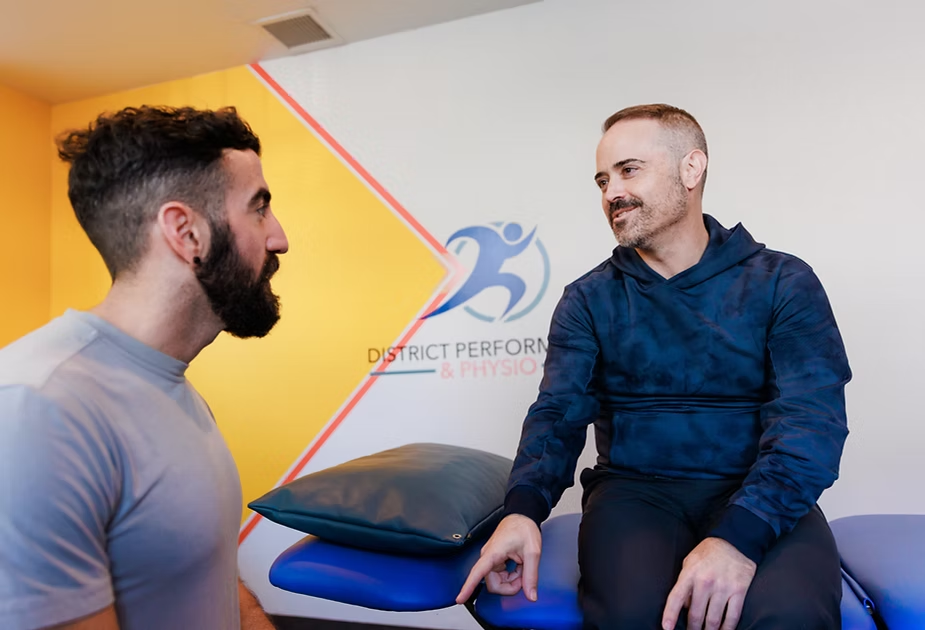
Your first visit starts with a detailed look at how your whole body moves, not just the area that's bothering you. This helps identify compensations, imbalances, and movement patterns that might be driving the problem.
Step 2: Your Customized Plan
Based on your assessment, your physical therapist builds a plan tailored to your specific body and goals. No cookie-cutter routines. No generic exercises that don't match what you actually do.
Step 3: Hands-On Treatment
Each session includes manual therapy, targeted corrective exercises, and movement training that mirrors the activities you love. Tools like dry needling and myofascial work are added when they support your recovery and performance goals.
Step 4: Progressive Adjustments
Your plan evolves as you do. Your physical therapist tracks your progress and adjusts your program so you're always moving forward, not just going through the motions.
What Conditions and Goals Does It Address?
Performance physical therapy covers a wide range of needs on both the recovery and performance side.
Recovery-focused goals:
Dealing with back pain that limits movement or certain positions
Gym sessions (strength training or classes) affected by shoulder and knee pain during lifting or overhead work
Run clubs or recreational runners dealing with running-related injuries and gait issues
General exercise and everyday activity where hip or back discomfort flares and limits consistency
Recurring injuries that keep coming back despite rest or short-term fixes
Performance-focused goals:
Breaking through strength or endurance plateaus
Improving mobility and movement efficiency
Correcting muscle imbalances before they become injuries
Building a stronger physical foundation for long-term activity
Preparing for a race, competition, or new training block
The Benefits of a Performance-Based Approach
When your care is built around performance and not just pain management, the results tend to go further and last longer.
Our clients regularly see improvements across a few key areas:
Stronger movement foundation. Imbalances and compensations get corrected, so your body works the way it's supposed to.
Faster recovery. Between sessions and after training, your body bounces back more efficiently.
Better consistency. Fewer interruptions to your training mean more progress over time.
Longer-term results. Because we address root causes, you're not patching things up and hoping for the best.
And because every session is one-on-one, you get the individual attention that makes a real difference in your outcome.
When Is the Right Time to Start?
You don't have to be in serious discomfort to benefit. Starting before things get worse is often the smartest move an active person can make.
Good times to start performance physical therapy:
During your off-season, when you want to address imbalances and build a stronger base
After finishing traditional rehab, when you're ready to return to full performance
Before a big race, competition, or new training block
When something has been nagging for a while and hasn't fully resolved on its own
When your training has plateaued, and you're not sure why
Ready to Feel Your Best?
You do not have to live with daily stiffness or let your fitness goals slip away. Investing in your well-being is the best choice you can make for your active lifestyle.
At District Performance & Physio, our team of performance physical therapists is ready to help you discover the power of movement. Let's move together and take control of your health today!
Book now to schedule your first session and begin your recovery.
Want more tips on recovery? Check out our entire Active Recovery Guide


Comments