
Should You Really Rest an Injury? It Depends.

Updated: Aug 20

We have all been there. You are working out, playing your favorite sport, or running around the city when suddenly you get hurt. Your first instinct might be to curl up on the couch, pull out an ice pack, and stay completely still for a week. Someone probably told you to just rest it. But as you sit there watching your hard-earned fitness slip away, you start to wonder if doing absolutely nothing is truly the right move for your recovery from injury.
The truth is that the old advice to just stay in bed is often outdated. It is not a simple yes or no answer. The right path to healing is filled with nuance, and it depends heavily on your specific situation.
What Rest Actually Means for an Injured Body
Most people think resting an injury means stopping everything and becoming a couch potato. That is complete rest, and it is rarely the best medicine for an active person.
True recovery from injury is about smart management. Instead of shutting down your whole life, the goal is to find a balance between protecting the hurt area and keeping the rest of your body moving. This is called active recovery or modified movement. If you hurt your shoulder, your legs still work perfectly fine. If you hurt your ankle, you can still build upper-body strength. Moving safely keeps your heart pumping, your mind clear, and your fitness on track.
Injuries That Actually Get Worse With Total Rest
Resting a broken bone makes sense, but too much rest for common aches and pains can backfire. Many conditions improve with movement, while overprotecting them leads to stiffness, weakness, and more pain.
Here are situations where active recovery is better than total rest:
Lower Back Pain: Sitting or lying still tightens back muscles and reduces blood flow. Walking and light movement keep your back loose and help you heal faster.
Tendon Pain: Tendons need stress to rebuild. Total rest weakens them, while gradual loading makes them strong again.
Chronic Joint Pain: Joints need movement for lubrication. Avoiding activity makes them stiffer, while gentle movement keeps them flexible and eases discomfort.
Muscle Strains (after 48 hours): After pain subsides, too much rest causes tight scar tissue. Light stretching and movement help restore flexibility.
Neck Pain: Your neck needs blood flow and movement to stay healthy. Prolonged rest tightens muscles and increases tension.
Plantar Fasciitis: Total rest tightens foot tissue, causing pain with initial steps. Light stretching, rolling, and walking keep tissue flexible and reduce pain.
Shoulder Impingement: Avoiding all movement tightens the joint and can lead to frozen shoulder. Modify and perform pain-free movements to keep the joint healthy.
When Rest Is the Right Call
There are absolutely moments when your body needs you to pause. In the early stages of specific severe issues, stopping activity is genuinely the right move to prevent further damage.
You should choose complete rest for the affected area if you experience:
Acute Fractures: Broken bones need total stillness to knit back together safely.
Severe Tissue Damage: Major muscle or tendon tears require a protective window to start healing.
Post-Surgery Windows: Immediately after an operation, following strict protection guidelines is critical.
Inability to Bear Weight: If you cannot stand or walk on a joint without severe, structural pain, it needs to be unloaded.
Visible Trauma Signals: A joint that is completely unstable, loose, or showing extreme heat and massive swelling needs a timeout.
When Rest Can Actually Slow You Down
While initial rest can help a fresh injury calm down, staying still for too long can actually push you backward. Prolonged inactivity creates a whole new set of problems that make your ultimate return to sports or gym life much harder.
When you stop moving entirely, your body adapts to that lack of demand very quickly.
Risks of Long-Term Inactivity
Muscle Loss: Muscles begin to lose strength and size after just a few days of zero use.
Joint Stiffness: Without movement, joints lose their natural lubrication and become tight and painful to move.
Slower Healing: Tissues need blood flow to heal. Sitting still reduces circulation, which means fewer nutrients reach the injured spot to help it rebuild.
Loss of Confidence: The longer you avoid movement, the more nervous your brain becomes about moving that area again.
The Difference Between Pain You Push Through and Pain You Don't
Knowing what to feel for during your recovery process is tough. To help you navigate your daily movements safely, use this simple guide to see if a sensation is a green light to keep going or a red light to stop.
Safe Sensation (Green Light) | Warning Signal (Red Light) |
A dull, predictable ache during or after movement | Sharp, stabbing, or sudden lightning-bolt pain |
Mild discomfort that stays at a steady level | Pain that steadily climbs higher with every single repetition |
Discomfort that fades away within 24 hours of exercise | Pain that leaves you limping or hurting the next day |
A feeling of muscular fatigue or stretch | The feeling of a joint giving out |
What Smart Recovery from Injury Actually Looks Like
A successful comeback is never accidental. It requires a structured, step-by-step strategy that respects your body's biology while keeping you as active as safely possible.
1. Accurate Assessment
You cannot fix a problem if you do not know exactly what it is. A real plan starts by identifying the root cause of the issue, not just looking at where it hurts.
2. Modified Activity
Instead of stopping your workouts, we swap out the movements that hurt for variations that feel great. This keeps your fitness levels high while protecting the healing tissue.
3. Progressive Loading
Tissues grow stronger by handling weight and stress. Once an injury calms down, we gradually add light weights, resistance, and volume to rebuild your physical renewal and structural strength.
4. Monitoring Progress
We constantly check how your body responds to exercise. If an activity goes well, we move forward. If it causes a flare-up, we adjust the strategy so you never lose momentum.
How a Physical Therapist Helps You Recover Without Losing Everything You've Built
You spent months or years building your strength, speed, and endurance. Going to a doctor who simply tells you to stop doing what you love is frustrating. That is where a physical therapist steps in to offer a different path.
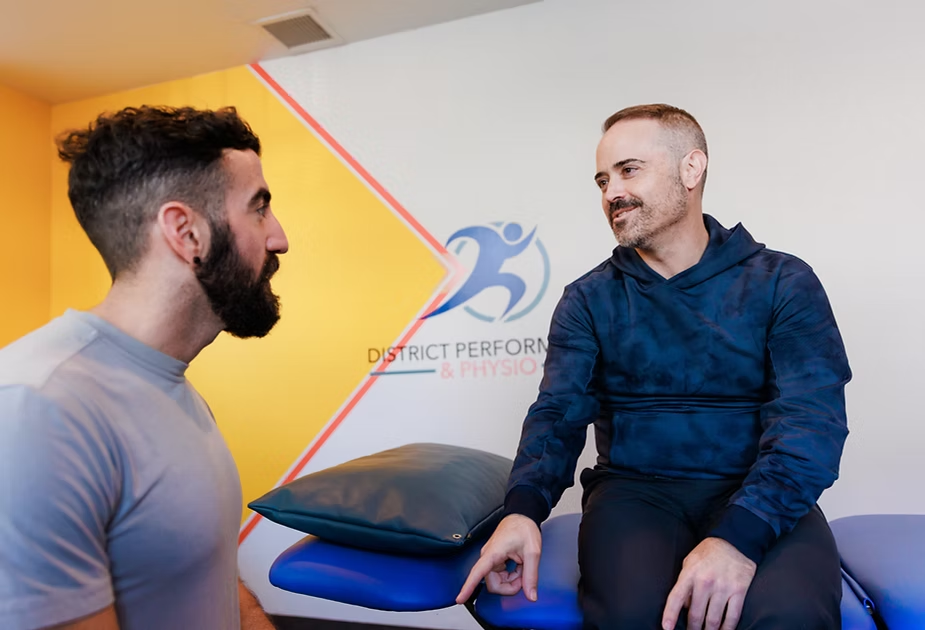
Our team of performance physical therapists at District Performance & Physio looks at your recovery through the lens of an athlete or active adult. Our job is to keep you in the game, gym, or running club while you heal.
One-on-One Care: Every session is spent directly with an expert therapist who understands your specific sport and performance goals.
Root Cause Focus: We do not just rub the spot that hurts. We find the movement imbalances that caused the strain in the first place, so it does not happen again.
Custom Modifications: We write specialized workout adjustments so you can keep lifting, running, or training other parts of your body without interrupting your healing.
Signs You Need More Than Rest
If you are waiting around hoping an injury will just disappear on its own, keep an eye out for these red flags. They mean it is time to stop guessing and get professional guidance.
The injury happened over two weeks ago and you see zero functional improvement.
You are forced to alter the way you walk, run, or lift just to get through a session.
The area feels okay when you rest, but the moment you try to return to your sport, the same old ache returns.
You are taking over-the-counter pain pills just to survive your workouts or daily activities.
Take Control of Your Recovery Process
Your body is remarkably resilient, and it wants to heal. It just needs the right guidance, the proper amount of physical challenge, and a strategy built around your lifestyle. You do not have to figure out this recovery journey all on your own.
Are you ready to feel your best? Schedule your visit now to take control of your health!
Want more tips on recovery? Check out our entire Active Recovery Guide


Comments